
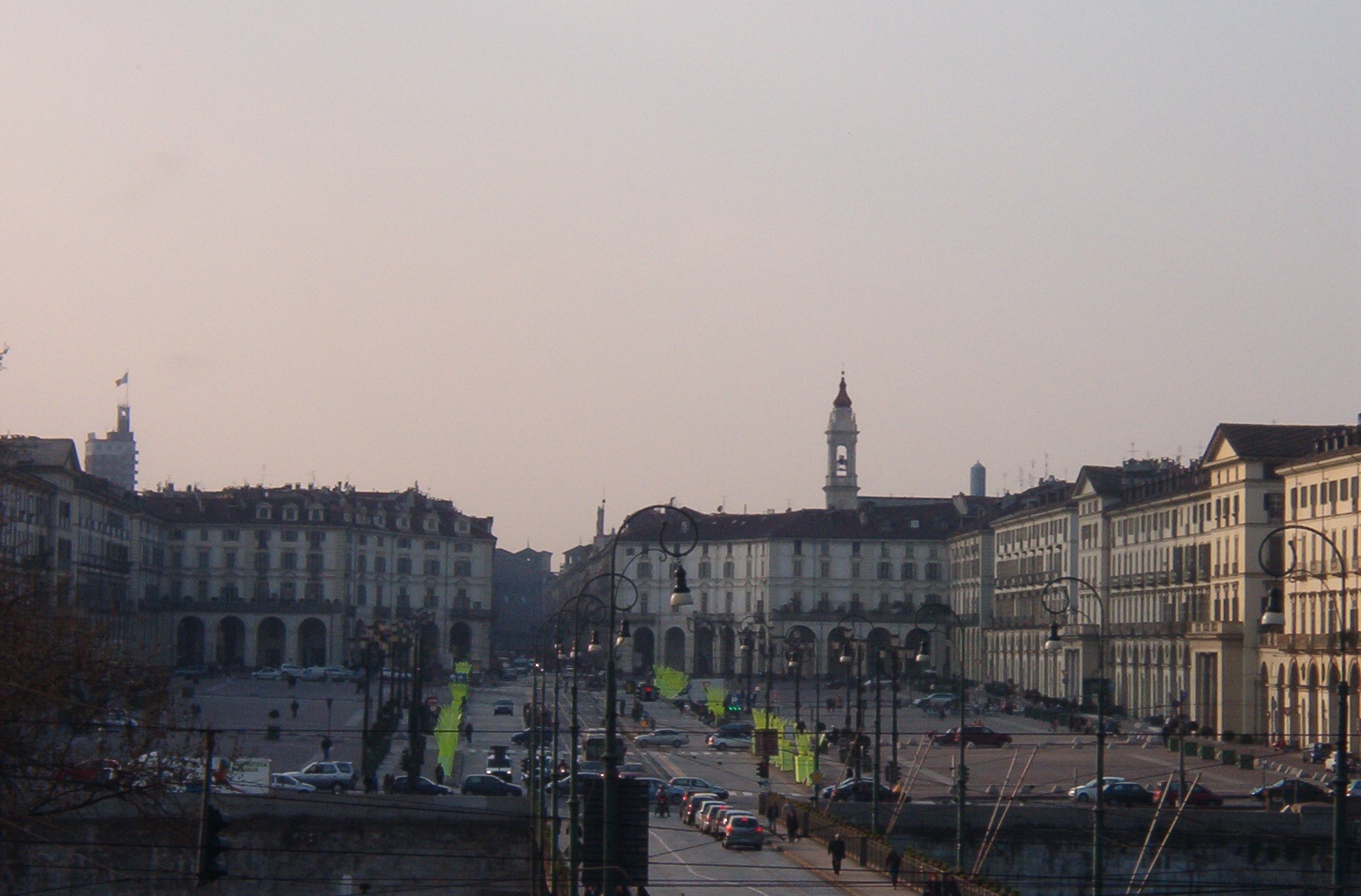
Piazza Vittorio Veneto
Piazza Vittorio Veneto, commonly known as Piazza Vittorio, is one of the most emblematic places in Turin. Located in the heart of the city, between the end of Via Po and the River Po, the square is not only an architectural wonder, but also a crossroads of history, culture, and social life.
The square has an area of 31,000 square meters, making it one of the largest porticoed squares in Europe. Its rectangular shape with one side in a semicircle is a masterpiece of urban planning, designed to harmonize aesthetic beauty with functionality. This square, originally called Piazza Vittorio Emanuele I, was renamed Piazza Vittorio Veneto in 1920, in honor of the decisive battle of World War I that led to the Italian victory.
The history of this place dates back to Roman times, when the area served as the eastern entrance to the city of Augusta Taurinorum. Over time, the area evolved, becoming an important military square during the reign of the Savoy family. The most significant urban planning project took place under the reign of Carlo Emanuele II, when the architect Amedeo di Castellamonte began the transformation of the area, contributing to the creation of Via Po and the square itself.
During the Napoleonic occupation, the square was renamed Place Impérial and underwent further modifications. However, with the Savoy restoration and the return of Vittorio Emanuele I, the square assumed its current configuration. The elegant porticoed buildings surrounding the square were designed by Giuseppe Frizzi in 1825, combining Baroque and Neoclassical elements that give the square a harmonious and solemn appearance.
Today, Piazza Vittorio Veneto is a lively center of cultural and social activities. Its large surface area is perfect for hosting mass events such as concerts, shows, and cultural events. The numerous bars, cafes, and restaurants under the porticoes attract both residents and tourists, creating a lively and welcoming atmosphere, especially during weekend evenings.
A notable feature of the square is the Vittorio Emanuele I bridge, which connects the square to the right bank of the Po and the Borgo Po district, where the church of Gran Madre di Dio and Monte dei Cappuccini are located. This bridge, built during the French occupation, is an architectural element that adds further charm to the square, offering spectacular views of the river and the city.
During the 20th century, Piazza Vittorio Veneto witnessed numerous historical events. In 1945, it was the site of the celebrations of the liberation of Turin from Nazi-fascism, an event still commemorated today. In the 1960s, the square was illuminated with the characteristic “Empire lamps with cornucopia arm,” adding a touch of nighttime elegance to the already picturesque urban setting.
In recent years, the square has undergone redevelopment interventions, particularly on the occasion of the 2006 Turin Winter Olympics. The paving has been redone and new pedestrian spaces and an underground parking lot have been created, making the square even more accessible and functional. Despite these modernizations, the square has retained its historical charm, continuing to be a reference point for cultural and social events.
Piazza Vittorio Veneto is also an important film set, appearing in movies such as “The Italian Job” and “The Second Time.” These cultural references underline the importance of the square not only as an urban space, but also as a cultural icon.
Read More