
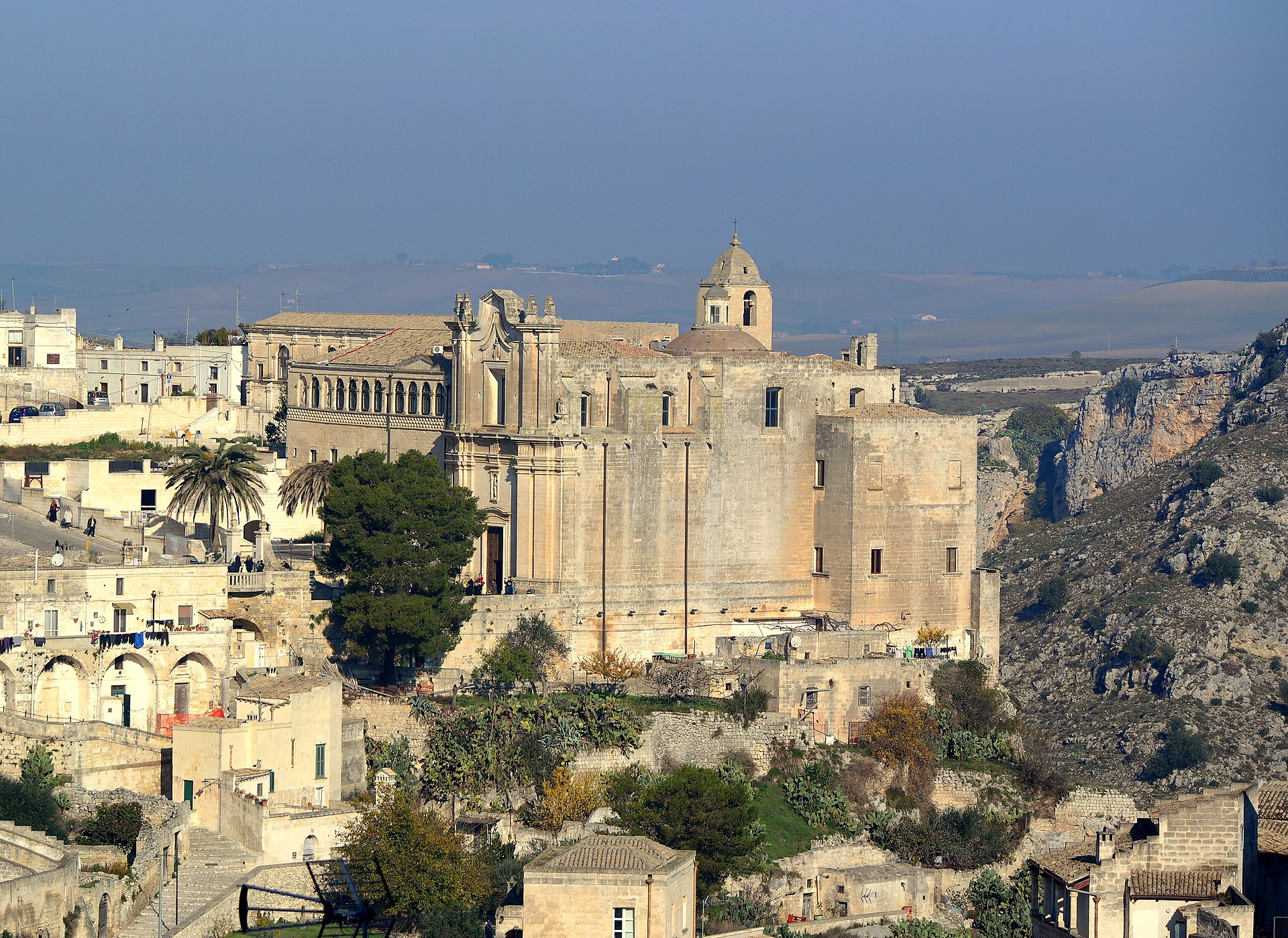
Church of Sant'Agostino
The Church of Sant’Agostino, located in the heart of Matera, is one of the most fascinating testimonies of the city’s sacred architecture, as well as a symbol of the historical and cultural richness of the area. This extraordinary religious building, founded in the 15th century, represents a perfect combination of art, faith, and history, and continues to be a fundamental point of reference for the Matera community.
The construction of the church began in 1591, by the Order of the Hermits of Sant’Agostino, who established a convent there. The architecture of the building reflects late Renaissance style, characterized by clean lines and sober elegance. The main facade, simple but imposing, is decorated with a limestone portal, surmounted by a triangular pediment. Above the portal, a central window illuminates the interior, creating a play of light and shadow that enhances the spirituality of the environment.
Upon entering the church, one is immediately struck by the beauty of the frescoes and decorations adorning the walls and ceiling. The single nave, spacious and bright, is characterized by a coffered wooden ceiling, richly decorated. The frescoes, dating back to the 17th century, depict scenes from the life of St. Augustine, biblical episodes, and figures of saints, and are the work of local artists who have combined the influence of Italian artistic tradition with elements of popular devotion.
The main altar, located in the deepest part of the church, is a true masterpiece of sacred art. Made of polychrome marble, it is decorated with sculptures and golden stuccoes representing the glory of St. Augustine. Above the altar, a large painting depicts the saint in ecstasy, surrounded by angels and saints. This emotionally impactful painting invites reflection on faith and spirituality.
The side chapels, dedicated to various saints, house minor altars and statues of remarkable artistic value. Among these, the chapel of Our Lady of Grace stands out, with a wooden statue of the Virgin Mary that is the object of particular devotion by the faithful. The decorations of the chapels are rich in detail and testify to the importance of the church as a place of worship and pilgrimage.
The Church of Sant’Agostino has gone through various historical phases, each of which has left a significant imprint on its structure and function. During the Napoleonic period, the convent attached to the church was suppressed and the building was used for different purposes, until it was returned to its original function. This tumultuous history has helped strengthen the bond between the church and the community, making it a symbol of resilience and continuity.
Read More