
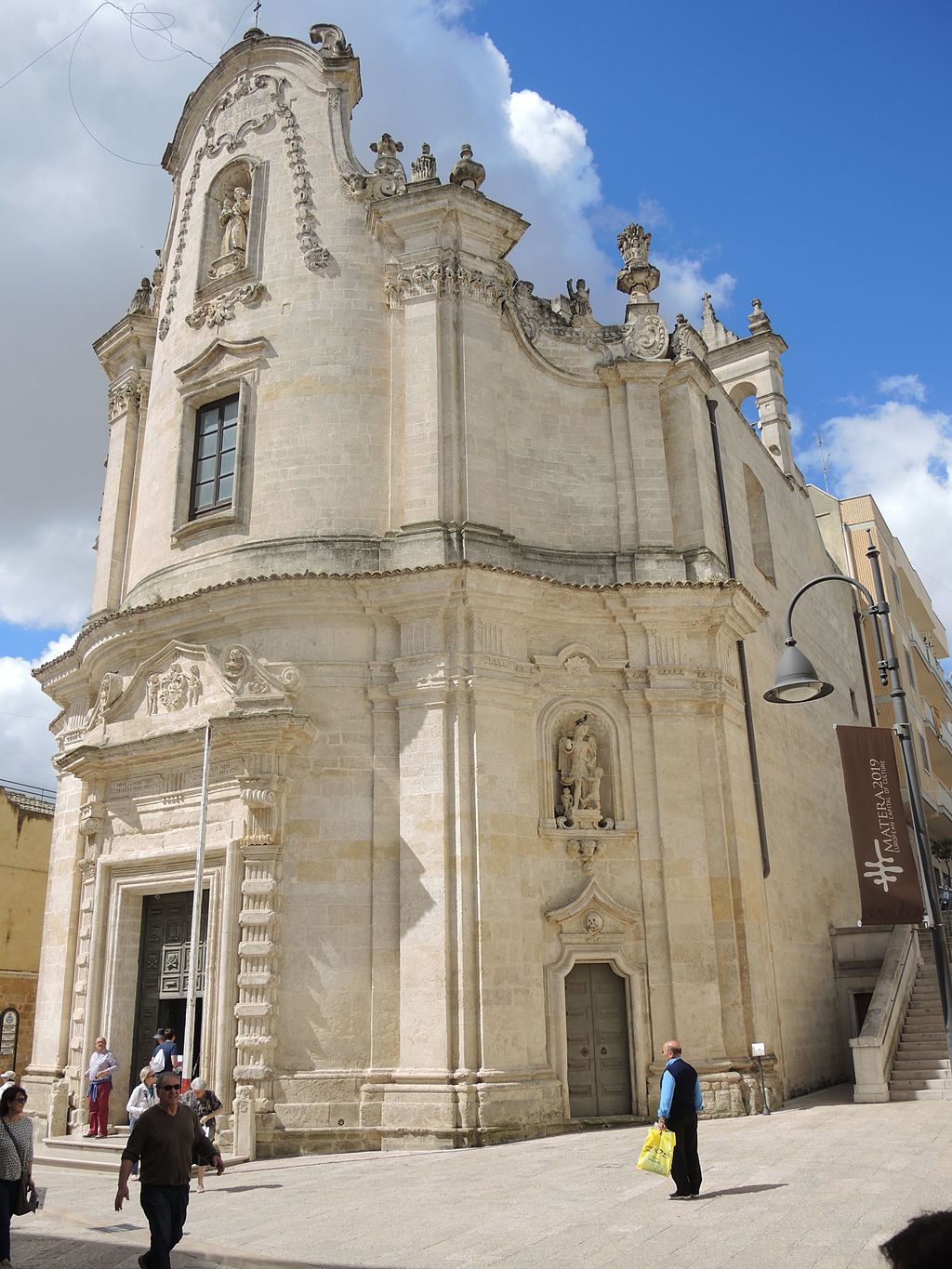
Church of Purgatory
The Church of Purgatory in Matera, located in the heart of the historic center, represents a fascinating example of Baroque architecture and religious devotion dating back to the 18th century. Built between 1725 and 1747, this church is dedicated to the souls in Purgatory, a central theme in the spirituality of the time, focused on redemption and prayer for the deceased.
The facade of the Church of Purgatory is a triumph of symbolism and Baroque art. Characterized by elaborate decorations, the facade is dominated by sculptures of skulls, skeletons, and angels holding the instruments of the Passion of Christ, a powerful visual reminder of the fragility of human life and hope in eternal life. Above the main portal, the effigy of the Madonna with the Child symbolizes piety and redemption, offering a visual and conceptual contrast with representations of death.
The interior of the church is equally rich in artistic and spiritual details. The single nave is adorned with frescoes and golden stuccoes depicting biblical and allegorical scenes. The finely crafted high altar is a work of art that immediately captures the attention of visitors. One of the most notable elements is the painting of Purgatory, located above the altar, depicting the purging souls surrounded by flames and angels comforting them. This painting, with its powerful theological message, invites the faithful to reflect and pray for the deceased.
From a historical perspective, the Church of Purgatory is closely linked to the social and cultural life of Matera in the 18th century. It was built during a period of great religious fervor, when the city was an important center of devotion and spirituality. The choice of the theme of Purgatory reflects the theological concerns of the time and the strong influence of the Counter-Reformation, which had reaffirmed the importance of prayers for the souls in Purgatory.
Politically, the construction of the church took place during a period of relative stability under Bourbon rule, which favored the realization of numerous religious and cultural projects. The Church of Purgatory is not only a place of worship, but also a symbol of the power and wealth of the Catholic Church at that time. The noble and bourgeois families of Matera generously contributed to its construction and decoration, seeking to secure a privileged place in the afterlife through devotion and charity.
Socially, the church played a central role in the life of the Matera community. In addition to religious functions, it was the site of numerous ceremonies and celebrations, such as processions for the Feast of the Souls in Purgatory, which involved the entire city. These celebrations were moments of great collective participation, strengthening social ties and community cohesion.
An interesting anecdote related to the Church of Purgatory concerns its recent restoration, which brought to light numerous hidden details and allowed for an even greater appreciation of the beauty and complexity of its decorations. During the restoration work, frescoes and decorations that had been covered over the centuries were discovered, revealing new facets of the church’s artistic history.
Read More