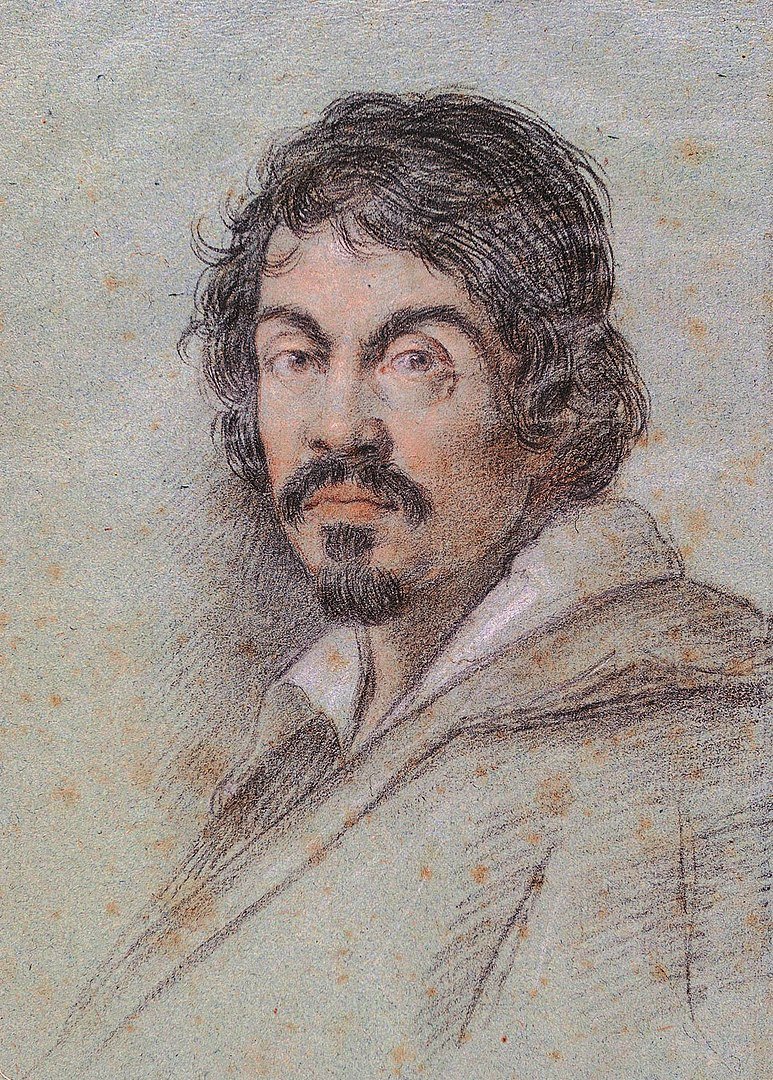
Michelangelo Merisi da Caravaggio, known simply as Caravaggio, was born on September 29, 1571 in Milan or Caravaggio, a small town in Lombardy. His name is indissolubly linked to one of the most fascinating periods in art history: the Baroque. Son of Fermo Merisi, an architect-decorator, and Lucia Aratori, Caravaggio lost his father and grandfather to the plague when he was only six years old. This family tragedy and the instability that followed may have contributed to his turbulent character and irregular life.
At the age of thirteen, Caravaggio began an apprenticeship in Milan with Simone Peterzano, a student of Titian, who provided him with a solid foundation in painting techniques and Renaissance principles. However, Caravaggio soon showed a rebellious personality and a preference for adventurous life, which were reflected in his innovative art.
In 1592, at the age of twenty-one, he moved to Rome, the artistic center of the time, in search of fortune. At first, he lived in poverty, painting still lifes and portraits on commission. The turning point came when Cardinal Francesco Maria del Monte noticed his talent and welcomed him into his circle. Thanks to the cardinal’s support, Caravaggio obtained important commissions, including the decoration of the Contarelli Chapel in the church of San Luigi dei Francesi, where he created masterpieces such as “The Calling of Saint Matthew” and “The Martyrdom of Saint Matthew”.
Caravaggio’s art is characterized by the revolutionary use of chiaroscuro, a technique that contrasts strong light and shadow to create dramatic and intense effects. This style, known as tenebrism, gave his works a raw and immediate realism that broke with the idealized conventions of the Renaissance. His paintings did not depict ideal figures, but common people, often taken from the streets, with faces marked by life. This stylistic choice, together with the representation of sacred scenes in everyday contexts, aroused both admiration and controversy.
An emblematic example of his style is “The Death of the Virgin”, a painting that depicts Mary as a common dead woman, causing outrage among many contemporaries. The work was rejected by the church for which it was commissioned, but later found admirers among private collectors.
Despite his professional success, Caravaggio’s personal life was marked by violence and clashes with the law. He was arrested several times for brawls and acts of violence, including the murder of Ranuccio Tomassoni in 1606, which forced him to flee from Rome. Thus began a period of wandering life that took him to Naples, Malta, and Sicily, always seeking protection and new commissions. During his stay in Malta, he painted “The Beheading of Saint John the Baptist”, the only work bearing his signature, written with the saint’s blood.
In Naples, Caravaggio continued to produce important works, such as “The Seven Works of Mercy”, but his tumultuous life did not give him respite. After a series of vicissitudes, including new conflicts and escapes, he decided to return to Rome hoping for a papal pardon. He tragically died in Porto Ercole on July 18, 1610, probably due to malaria, before he could obtain forgiveness.
Caravaggio’s influence on art was enormous and lasting. His technique and realistic approach influenced numerous artists, giving rise to the Caravaggio movement. Among his most famous followers are Artemisia Gentileschi, Jusepe de Ribera, and the young Velázquez. The drama and realism of his works opened new paths in Baroque art, marking a decisive turning point in the history of painting.
Read all