
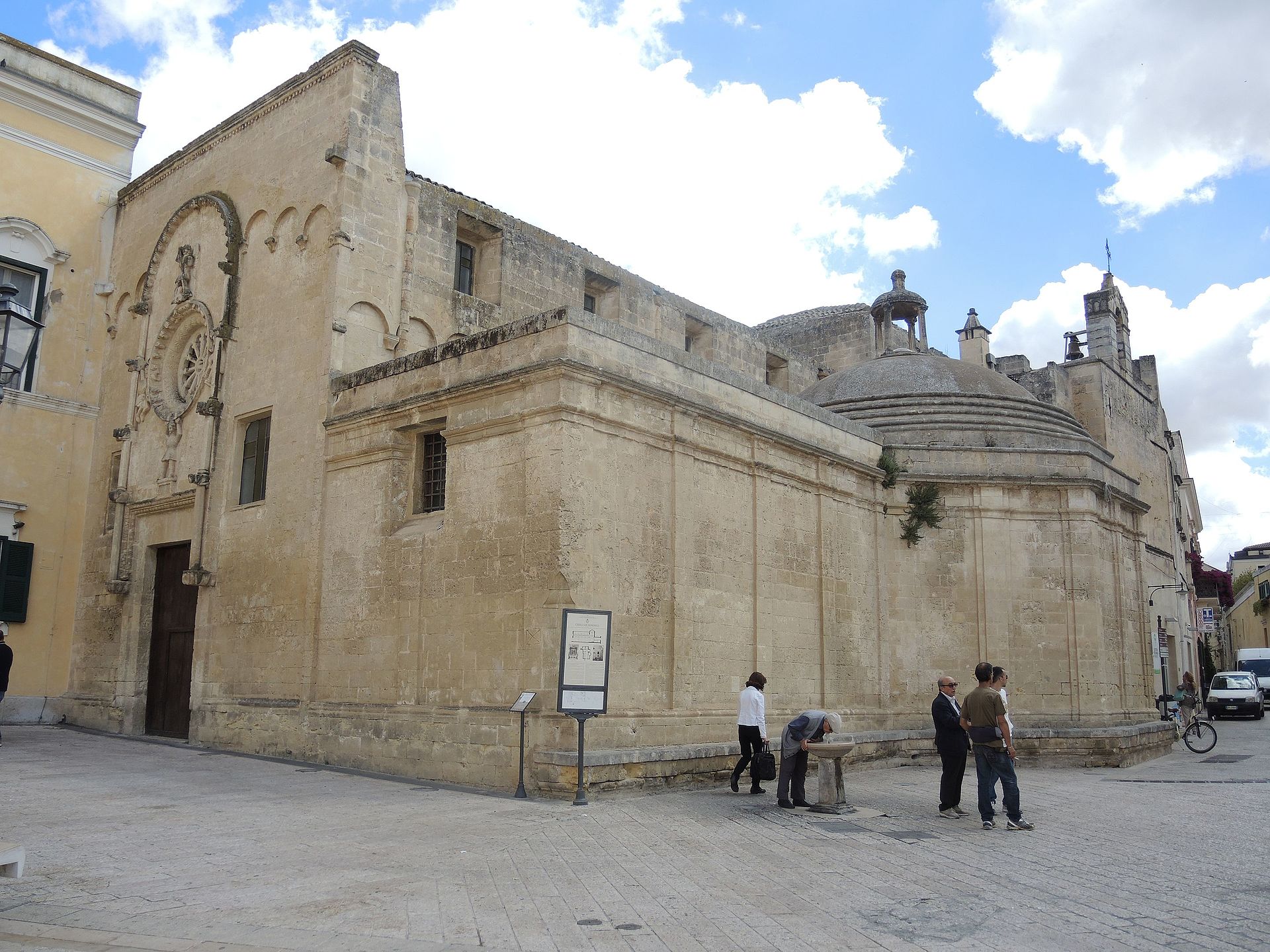
Church of San Domenico
The Church of San Domenico in Matera, located in the historic center of the city, is a jewel of art and architecture that tells a rich and fascinating story. Built in the 13th century by the Dominicans, this church is one of the most significant examples of Romanesque-Gothic architecture in Basilicata and reflects the importance of the Dominican order in the religious and social life of Matera.
The construction of the Church of San Domenico began in 1230 at the initiative of the Dominicans, a religious order known for its commitment to preaching and education. The church was erected during a period of great religious fervor, when Matera was consolidating its role as a spiritual and cultural center. The location of the church, strategically chosen in the heart of the city, highlights the influence of the Dominicans in the local community.
The facade of the Church of San Domenico is a masterpiece of simplicity and elegance. Made of local stone, it features a Gothic portal surmounted by a pointed arch and a central rose window, which is a distinctive element of Gothic architecture. The rose window, with its intricate details, allows light to filter into the interior of the church, creating plays of light that enhance the spirituality of the place. The facade is completed by a bell tower that, with its slender structure, dominates the panorama of the historic center of Matera.
Inside, the church has a Latin cross plan with a central nave and two side aisles, separated by columns with carved capitals. The interior environment is austere but suggestive, with a ceiling of wooden trusses that adds a touch of warmth and intimacy. The main altar, simple and majestic, is decorated with frescoes and stuccoes depicting scenes from the life of San Domenico and the Virgin Mary. These frescoes, the work of local artists from the 15th century, are a significant example of Matera’s painting tradition and reflect the devotion of the faithful. An interesting episode concerns the presence of a library inside the convent adjacent to the church, which housed a rich collection of manuscripts and rare books. This library was a center of study and research, frequented by scholars and intellectuals of the time. Its existence testifies to the importance of the church not only as a place of worship, but also as a center of culture and knowledge.
Read More